Safeguarding News for March 2026
Dear Colleague
Welcome to the April 2026 edition of the SAFEcic newsletter reviewing the safeguarding headlines and news stories from March.
Spring often heralds renewal and new growth and with that in mind we have some significant news about SAFEcic.
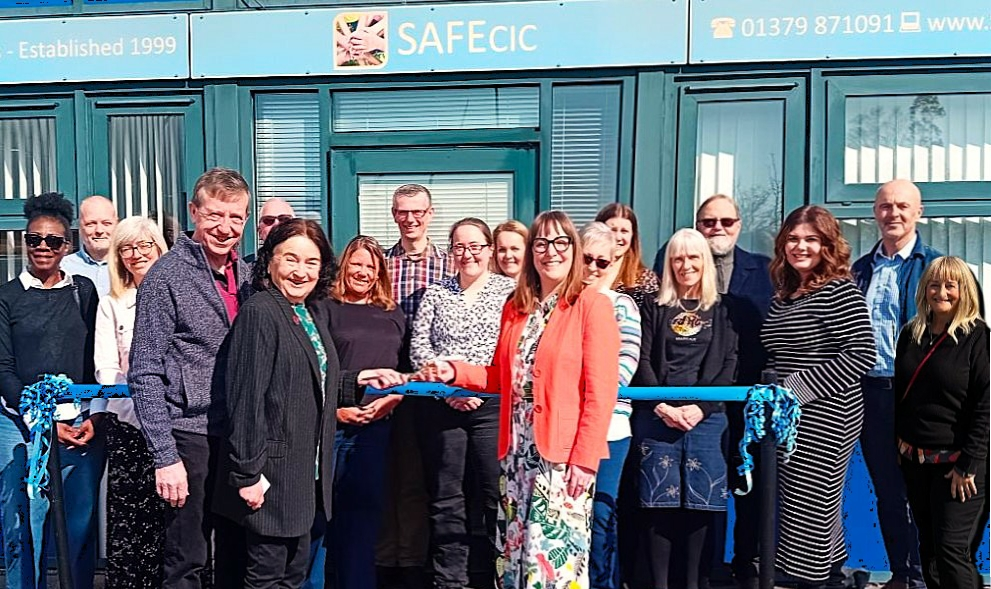
The 1st April 2026 was a landmark day for SAFEcic. After 26 years, our Managing Director (M.D.), Rosie Carter stood down from her senior management role and handed over the reins to the new M.D., Claire Stewart, to take the company forward in its new chapter. Claire is a highly experienced multi-agency safeguarding educational practitioner and is very much looking forward to working with you all and continuing to maintain the very high standards of ethical service to which all the SAFEcic team aspire. Rosie will continue to work as an Executive Consultant to support Claire in her new role and you can continue to contact her directly. We are sure, like all the SAFEcic team, you join us in giving a very warm welcome to Claire in her new role and wishing her every success in the future.
Stay informed - follow SAFEcic on social media:
 |
 |
 |
 |
Safeguarding Supervision
"Lead practitioners should have access to high-quality supervision.” – Working Together to Safeguard Children.
Being a Designated Safeguarding Lead (DSL) or Leading on Safeguarding in any organisation is one of the most demanding, isolating, and emotionally taxing roles, carrying immense responsibility. Without the right support, it can feel overwhelming. Supervision isn’t a luxury, it’s essential.
Professional safeguarding supervision helps DSLs and safeguarding teams stay resilient, confident, compliant and effective. It strengthens  decision-making, reduces stress, and ultimately creates safer communities.
Why choose SAFEcic?
- Tailored support: 1:1 or group sessions
- Flexible delivery: in-person or online (Zoom)
- Your schedule, your way: ad hoc, monthly, half-termly, termly, or annual
- Cost-effective: discounts for bulk bookings (20+)
Our supervisors are multi-agency professionals with extensive experience supporting educators, charities, managers, and volunteers.
Invest in your team. Protect your community. Safeguarding the safeguarders isn’t optional, it’s essential.
To find out more, email This email address is being protected from spambots. You need JavaScript enabled to view it. or click here
Professional Boundaries Training
Designed for managers who will gain an understanding of the concept of the duty of care and the code of conduct required when working with children, young people and adults who may be at risk.
We look at issues when personnel challenge professional boundaries and debate possible scenarios and the actions that need to be taken when there is a concern that professional boundaries have been breached.
The course is designed for managers of all those who work or volunteer directly, with children, young people, adults at risk and/or their families or carers. All delegates must already have current Safeguarding training certificates in place, as relevant to their role, prior to attending this live 2 hour course via Zoom.
The course includes a digital resource pack and certificate of attendance or each delegate, valid for three years.
For further information click here
Effective Safeguarding Record Keeping
Designed for those who Lead on Safeguarding and their Deputies, the session defines the meanings of confidentiality, consent, information sharing, privacy, mental capacity, record storage, safeguarding record keeping retention periods, data protection and UK GDPR in relation to those records
meanings of confidentiality, consent, information sharing, privacy, mental capacity, record storage and retention periods, data protection and UK GDPR in relation to safeguarding record keeping.
All delegates must already have a current Leading on Safeguarding training certificate in place before attending this course.
For further information click here
Single Central Record
Designed for personnel involved in managing and reviewing the SCR in regulated educational settings, in line with Ofsted and KCSIE 2025 expectations.
This live 2 hours course is thorough, detailed and fully up to date.
For further information click here
Working Together
Designed for professionals who Lead or Deputise for Safeguarding across education, health, social care, police, charity and other key services and aimed at strengthening your multi-agency safeguarding working. This course equips delegates with the knowledge and skills to collaborate effectively and put the child at the centre of every intervention. The course covers key legislation, guidance and local Safeguarding Partnership procedures, while developing your ability to reflect the voice of the child in all assessments and plans.
This training is essential for those committed to high-quality, child-focused, multi-agency work.
SAFEcic's Other Products and Services
Safeguarding Rapid Review Service
 (including Ofsted, CQC and Charity Commission regulated organisations) to gain external, expert insight and support to help their organisation attain the highest level of safeguarding culture, policy, procedures and practice.
A Rapid Review takes just two hours of management time via Zoom or Teams and the price includes preparation of a high-level assessment report and an action plan to efficiently and cost effectively address any identified issues. Find out more or book a Rapid Review
Some of SAFEcic' most popular offerings:
SAFE Membership
In addition to free access to the SAFEaward submission process, SAFE Membership offers an attractive array of benefits to any size of organisation, spanning many sectors.
One of the key drivers for many organisations is the provision of access to downloadable template policies and documents that allow our members to quickly create appropriate safeguarding policies and procedures, dramatically reducing the time it takes to create robust and workable rules and guidance for their organisations.
Other key elements integral to a SAFE Membership include:
- Up to date policies for child and adult safeguarding - CQC, Ofsted and Charity Commission compliant templates and downloads, including handy referral flowcharts and good practice guidelines, all constantly updated to reflect the latest legislation and best practice guidance
- Expert support for safeguarding concerns or questions about best practice
- Discounts for as long as the membership remains valid on all online training and open house courses, plus discounted public liability insurance from Access Underwriting.
To find out more or to purchase membership for your organisation click here. Prices start from just £60 per annum
The SAFEaward
The SAFEaward is a process available to all SAFEcic Members with provision of a self-audit tool that has been designed to help test your organisation's safeguarding arrangements.
The process includes an expert review upon submission and members who attain the SAFEaward are issued with a certificate recognising excellence in safeguarding and are invited to use the SAFEcic logo in their publicity.
Many SAFEaward accredited organisations display their certificates in reception areas which are highly visible to visitors and in many cases are viewed as a significant differentiator.
Safeguarding Audits
SAFEcic offers both Desktop and On-site Audits that include comprehensive policy reviews, recruitment and record keeping processes, personnel interviews and safeguarding walks to audit premises, activities and services.
The expert SAFEcic team has been providing safeguarding audits and pre-inspection audit services for over 25 years. We offer them for a wide range of organisations including charities, businesses, faith groups, leisure, health and education. Find out more.
Training Schedule
Our latest training schedule is listed below and feel free to share this email with your colleagues and they too can join our newsletter database.
To sign up simply click here.

Live Zoom Training with SAFEcic experts
Working Together
View available dates
Professional Boundaries Training
View available dates
Effective Safeguarding Record Keeping
View available dates
Single Central Record (SCR). Managing, Reviewing and Updating
View available dates
Blended Learning; self-paced online courses plus live Zoom training session
Leading on Child and Adult Safeguarding View available dates
Standard Child and Adult Safeguarding View available dates
Safeguarding: Trustees’ legal responsibilities View available dates
Safer Recruitment Training View available dates
Managing and Leading on International Safeguarding View available dates
SAFEcic's free hub resources by setting are available through the SAFEcic.co.uk main menu. Alternately you can bookmark the links below:
Education | Dental | Charities | GP & Primary Medical Services | Fath Groups | Entertainment & Leisure | Working Overseas |
Guidance
1. Working Together to Safeguard Children has been updated March 2026 and a Working together to safeguard children 2026: summary of changes made have been published.
The updated version clarifies that the guidance applies to all children, including:
- those living with their birth or extended family
- those in kinship care, including special guardianship
- adopted and looked after children in foster or residential settings
It also makes clear that practitioners should consider help, support and protection for unborn children where there are concerns.
2. Blowing the whistle to the Department for Education: Guidance updated March 2026
How to make a whistleblowing disclosure about an academy or post-16 provider has been updated:
What whistleblowing is
You can make a whistleblowing disclosure to report any wrongdoing that’s in the public interest.
Read whistleblowing for employees to find out about:
- what counts as whistleblowing
- how you will be protected by law if you make a disclosure
Who can make a disclosure
You can make a disclosure direct to the Department for Education (DfE) if you are:
- an employee
- a volunteer who has knowledge of the academy or post-16 provider – for example, if you are a trustee in an academy trust
Only employees are protected by law if they make a disclosure directly to their employer. Disclosures made to DfE by volunteers may not receive the same protections. However, DfE will always protect the identity of any whistleblower.
More information on how the DfE handles whistleblowing disclosures is available.
Consultations and Surveys

1. Stronger protections for children with allergies in school
Life-saving allergy pens must be stocked by schools for the first time under new plans announced 5 March 2026.The move will also see compulsory training for teachers and a requirement for each school to have a dedicated allergy policy.
As well as saving lives, the new measures will help children stay in school, with 500,000 days of learning lost due to allergy-related illness or medical appointments in the last year alone.
The plans come after the government listened to families and campaigners who have fought for change — including Helen Blythe, mother of Benedict Blythe, who tragically lost his life to an allergic reaction at school, and the National Allergy Strategy Group.
Replacing previous non-statutory advice, the consultation on the new guidance on supporting children and young people with medical conditions and allergies is now open until 11:59pm on 1 May 2026 ahead of coming into force in September 2026.
The new statutory requirements mean for the first time schools must:
- stock “spare” adrenaline auto-injectors for use in emergency situations
- provide allergy awareness training for all staff — covering recognition of symptoms, emergency response and the use of adrenaline devices — alongside improved incident recording and lessons learnt processes
- have a comprehensive policy for supporting children with medical conditions, including Individual Healthcare Plans to record specific arrangements for individuals like an allergy management plan.
Schools up and down the country are already undertaking the necessary training to keep children safe. This guidance will standardise practise, pointing to a collection of reliable resources for teachers to use, and work in parallel to the government’s open call to businesses to support with costs such as adrenaline auto-injectors.
2. New consultation to help children to enjoy healthier diets
Parents will find it easier to provide their children with a healthy diet with the government set to adopt a new model to assess the healthiness of food and drink.
Food and drinks identified as ‘less healthy’ by the government’s updated NPM would be restricted from being placed in certain locations in stores, from volume price offers that encourage over-purchasing such as get 3 for the price of 2, and subject to advertising restrictions on TV before 9pm and online at any time, subject to consultation.
The previous model is more than 20 years old and does not reflect modern dietary advice.
Applying the new NPM to junk food advertising and volume price restrictions could lead to 110,000 fewer cases of childhood obesity and up to 520,000 fewer cases of adult obesity in the long term.
The new model, based on the latest dietary recommendations, looks at the healthiness of food and drinks based on their balance of nutrients - calories, salt, saturated fat, protein and fibre - and also free sugars, which are added to products or released during food processing.
Adopting the new model will mean some products often marketed as healthier but which contain hidden sugars or are high calorie and are often a driver of childhood obesity – such as certain sweetened cereals and fruit yoghurts - could be in scope of the restrictions.
This will:
- strengthen the impact of the existing restrictions
- give parents a far clearer picture about what they are buying
- encourage industry to reformulate so food marketed at children is healthier
The new model aligns to dietary recommendations on free sugars, with children currently consuming double the recommended amount. High consumption of free sugars is directly associated with poor health outcomes and can often be found in food and drinks marketed as healthier than they actually are.
The consultation on applying the new NPM to advertising and promotions restrictions is open until 11:59pm on 17 June 2026 and builds on ongoing collaboration with industry to ensure we can collectively improve children’s diets. It invites views on:
- how and when the new NPM should be used
- the guidance businesses will need
- the timeline for implementation
Childhood obesity remains stubbornly high, with more than 1 in 3 children aged 10 to 11 living with overweight or obesity, and rates in deprived areas more than double those in more affluent communities. Obesity not only places a significant strain on the future health of a child but also costs the NHS billions of pounds to treat.
The rules do not ban the sale of products. They simply stop the relentless pressure of advertising and promotions for foods high in free sugars, salt and saturated fat.
This consultation is part of a series of measures by this government to combat childhood obesity and help support parents to raise the healthiest generation of children ever. Other measures include:
- extending the Soft Drinks Industry Levy
- banning the sale of high-caffeine energy drinks to children under 16
- introducing supervised toothbrushing for 3 to 5 year olds to protect those in the most deprived communities from tooth decay
Free breakfast clubs at schools are already providing a lifeline for so many, and more than 300,000 additional children are set to benefit from Best Start free breakfast clubs in April. The Healthy Start scheme is also helping provide those families eligible to buy healthy food and milk.
These are in addition to restricting less healthy food from being:
- placed in certain locations in stores
- included in volume price promotions
- advertised when and where children are most likely to be watching
Regulatory Bodies

Ofcom and all Online Safety
1. Protecting people online from self-harm content and cyberflashing
People in the UK will be better protected online from illegal self-harm material and unsolicited nude images, under new proposals published by Ofcom.
The regulator is consulting on updates to its codes of practice and guidance to reflect the Government’s recent creation of new priority offences under the UK’s Online Safety Act.
Duties on platforms
The Act lists over 130 priority offences. Under the Act, tech firms must assess the risk of these offences occurring on their sites and apps, put appropriate measures in place to mitigate the risk of them occurring, and take down priority illegal content quickly when they become aware of it.
Ofcom’s codes of practice and guidance set out ways platforms can comply with these duties.
New priority offences
In December 2025, the Government added cyberflashing and encouraging or assisting serious self-harm to the list of priority offences in the Act. To reflect this change in the law, we are consulting on updates to our Risk Assessment Guidance, Risk Profiles, Register of Risks, Illegal Content Judgements Guidance and Illegal Content Codes of Practice.
This means that providers will have to assess the risk of unsolicited nude images and illegal self-harm content appearing on their services. They will also have to take appropriate safety measures to protect users from these harms. We are proposing that various existing measures in our codes should apply to these offences, including:
- allowing users to report illegal content through reporting and complaints processes that are easy to find, access and use;
- making sure content moderation functions are appropriately resourced and individuals working in moderation are trained to identify illegal content;
- having content moderation systems and processes designed to take down illegal content swiftly when a platform becomes aware of it;
- when testing their algorithms, checking whether and how design changes impact the risk of illegal content being recommended to users;
- enabling users to block or mute other users and disable comments on their content;
- providing crisis prevention information in response to search queries regarding self-harm; and
- enabling users to easily report predictive search suggestions they believe may direct people towards priority illegal content.
Next steps
Ofcom are inviting responses to their consultation by 5pm on Friday 24 April 2026. They will take all feedback into account before making Their final decisions, Ofcom expect to publish in summer 2026.
2. Prosecutors warn young people may not recognise stalking, as CPS launches new Action Plan to stay ahead of digital offending
Young people may not realise they are victims, or even perpetrators, of stalking as increasing time spent online blurs the boundaries of acceptable behaviour, the Crown Prosecution Service has warned.
It comes as the CPS launches its first Stalking Action Plan - designed to equip prosecutors to tackle the offence in the digital age. The number of stalking offences charged reached a record high last year, with 7,168 offences charged.
Technological change is giving offenders new and inventive ways to contact victims and cross boundaries. Increasingly this includes the use of GPS trackers, social media platforms, online shopping channels and banking apps.
The CPS’s new Action Plan commits prosecutors to working closely with tech experts, police and victims, to better understand how stalking is evolving online. It also includes work to explore a dedicated statement for children and young people, to help them recognise stalking behaviours they may encounter or display as more of their lives move online.
Prosecutors are also being encouraged to charge breaches of Stalking Protection Orders (SPOs) wherever there is evidence to do so. SPOs can make positive requirements of offenders, such as engaging with mental health services or handing over mobile devices, providing tangible protection for victims. This can both prevent further contact with victims and help break cycles of reoffending. The CPS has also said a new flag for stalking cases will also enable it to better track the progress of charged stalking cases.
Other measures in the Plan include:
- Providing specialist training for prosecutors to better understand the overlap with other offences and underlying behaviours.
- Working with police to ensure officers and prosecutors can spot patterns of control and trauma response that underpin stalking.
- Updating the joint protocol on Stalking or Harassment with the National Police Chiefs’ Council to improve how these cases are handled across the criminal justice system and better support victims.
- Improving transparency through the introduction of stalking-specific data flagging, annual scrutiny panels and feedback mechanisms to strengthen policy and practice.
The full CPS Stalking Action Plan is available to read in full here – CPS Stalking Action Plan 2026-2030 | The Crown Prosecution Service
3. New screen time guidance for parents of under-5s
Government answers parents’ calls for support on screen time with new evidence-backed guidance.
Parents of young children are facing a constant battle with screens. Now, for the first time, the government is stepping in with clear, trusted guidance to help families navigate it.
Following weeks of engagement with over a thousand parents who called for clear support on how much screen time is too much, and how to build healthy habits, the government is delivering on its promise to provide judgement-free, practical support if they need it.
Some will oppose stepping in, but the government is clear: if the choice is between standing back or supporting parents to keep children safe, this government will always act.
Currently, parents are left to navigate fast moving technology alone – with a quarter (24%) of parents of 3 to 5 year olds finding it hard to control their child’s screen time, and 98% of two year olds watching screens every day.
This underlines the need for support, which is why we are giving parents the clear, trusted tools they need to cut through uncertainty and conflicting advice online.
The new guidance is available for free on the Best Start in Life website, with key tips including:
- Under 2s: Avoiding screen time other than for shared activities that encourage bonding, interaction and conversation.
- 2 to 5-year-olds: Trying to keep it to no more than one hour a day. Avoid at mealtimes and in the hour before bed.
- Content: Choosing slow-paced, age-appropriate content. Fast-paced, social media-style videos and AI toys or tools should be avoided for young children.
- Co-viewing: Watching or using screens together - talking, asking questions and engaging with the content - is better for children’s development than solo screen use.
This also forms part of wider action to support all children’s wellbeing in the digital world – running alongside the government’s consultation on further measures to keep children safe online.
The guidance is underpinned by the findings of an expert panel report led by the Children’s Commissioner Dame Rachel de Souza and Professor Russell Viner, a paediatrician and expert in children’s health.
The expert panel reviewed the latest scientific evidence on screen use in under-5s, and found that long periods of time spent on screens alone can get in the way of activities critical for development like sleep, physical activity, creative play, and interaction with parents.
But not all screen use is equal. The evidence shows that watching screens with an engaged adult where parents talk and ask questions is linked to better cognitive development than solo use, that slow-paced content is far better for development than fast-paced social media-style videos, and that time limits shouldn’t apply in the same way for screen-based assistive technologies to support children with special educational needs and disabilities.
Proposed measures in the government’s wider consultation on social media include a minimum age for social media, raising the digital age of consent, overnight curfews for certain age groups, restrictions on AI chatbots for young people, and whether school mobile phone guidance should be made statutory.
New legal powers taken through the Children’s Wellbeing and Schools Bill will allow the government to act quickly on the outcomes of the consultation.
Ofsted
1. Ofsted announces new pilot to use more serving school and college leaders as inspectors
Ofsted has announced that it is piloting a new way of involving more serving education leaders in the inspections of schools and further education providers.
Inspections already bring together the expertise of Ofsted’s full-time His Majesty’s Inspectors (HMI) and the real-time sector knowledge of contracted Ofsted Inspectors (OIs). This new pilot is exploring how Ofsted can enhance that crucial blend with even more shared insight into the context, challenges and day-to-day realities providers face, and how inspection can support improvement.
This is part of Ofsted’s commitment to making sure inspection teams include people with relevant, sector specific experience, who are best placed to understand the part of the system they are inspecting.
Currently, most OIs join Ofsted as individuals and their interaction with other OIs and HMI is largely limited to their inspection work. While this has worked well for inspection, it can restrict chances for two-way professional reflection and shared learning. The pilot is developing structured engagement opportunities for OIs, provided by the Ofsted Academy, to help forge an even deeper and more enduring connection between Ofsted and the education sector.
The scheme, which is already underway, involves OIs joining Ofsted as groups of peers drawn from the professional organisations and networks they’re already part of, such as multi-academy trusts, local authorities, dioceses, local school networks, independent learning providers and general further education colleges.
OIs recruited in this way will form a professional community with each other and with HMI. Ofsted will ensure they have regular opportunities to share feedback collectively and to reflect on what they’re seeing and learning day-to-day. Their experiences will then feed directly into how Ofsted continuously improves inspection.
Charity Commission
Regulator launches inquiry into international children’s charity over serious safeguarding concerns
The Charity Commission is investigating CISV International Ltd (charity number: 1073308) and has appointed an Interim Manager to the charity.
The charity was set up to further education in the international understanding of children and to shape their development, with a focus on peace. It offers educational activities for children, including international camps, through a federation of nearly 70 national associations with over 200 chapters or local groups.
In February 2026, the charity submitted a serious incident report relating to the charity’s safeguarding practices, in line with the Commission’s published guidance.
The report raised several serious concerns about the charity’s safeguarding policies and procedures, and its inability to enforce compliance by member associations. Due to the nature of these concerns, the Commission has escalated its engagement to a statutory inquiry.
The inquiry will examine the extent to which the charity’s trustees are complying with their legal duties in respect of the administration, governance, including safeguarding, and management of their charity in particular:
- whether the trustees have adequate strategic oversight of the charity and its activities
- whether the charity has systems in place to identify, assess and manage risks to beneficiaries
- the extent to which there has been any misconduct and / or mismanagement by the trustees.
The scope of the inquiry can be extended if additional regulatory issues emerge.
Worthy of Note

1. Domestic abuser who broke his partner’s neck leaving her paralysed is jailed
An abuser who suggested it was a ‘playfight’ that broke his partner’s neck, leaving her paralysed and in need of round the clock care, has been jailed for grievous bodily harm.
Landscape gardener, Robert Easom, 57, was jailed for 16 years plus a four-year extended licence period. He had exercised coercive control over his partner, being loving one minute and lashing out verbally and physically the next.
On 17 February 2025, Easom’s partner tried to end the relationship. In response, Easom carried out a violent assault culminating in him pushing down on his partner’s head with such force that he broke her neck.
Easom and the woman began their relationship some eight years before the life changing assault. It started well but over time, Easom became verbally abusive, criticising her and belittling her. He could be very loving and made her believe that she had been overreacting to incidents where she was frightened and the relationship continued.
This was to be the pattern of Easom’s coercive control, loving one minute and abusive and violent the next. The violence escalated. In 2021, Easom wrapped her head in a bedsheet, causing her to struggle for her breath. In January 2025, following a disagreement, he accelerated rapidly to frighten her and then performed an emergency stop just before a wall. He then headbutted her and scraped her face with his stubble.
The final incident occurred on 17 February 2025, when the woman tried to end the relationship, calmly telling Easom that it was for the best as they were arguing. Easom flew into a rage. He started shouting, accusing her of causing an argument, pushed her forcefully against the headboard and grabbed her throat.
He then left the room and briefly returned, shouting “shut the f*** up” and pushing her head with such force that he broke her neck. By the time he stopped, the damage had been done. After some convincing, he called an ambulance, lying to the operator and saying she had fallen out of bed.
She was taken to the Royal Preston Hospital where she was diagnosed with a broken neck. She had an operation to restore her spinal alignment, but the neurological damage rendered her tetraplegic and couldn’t be repaired.
Easom was arrested and gave a prepared statement during his police interview where he claimed they had been playfighting. On the first day of his trial at Preston Crown Court, Easom pleaded guilty to two counts of actual bodily harm and one count of controlling or coercive behaviour. He admitted breaking his partner’s neck but denied that he had intended to do serious harm.
Following the trial, he was found guilty of causing grievous bodily harm with intent. He was sentenced to 16 years in prison plus a four-year extended licence period at the same court on 27 February 2026.
2. Sexual health doctor sentenced after assaulting and secretly filming patients for his own sexual gratification
A doctor who exploited patients by sexually assaulting them and secretly filming them during routine examinations has been sentenced to six years in prison.
Dr Timothy Girling, 55, of West Molesey, Surrey, carried out intimate physical examinations at a medical centre in Bournemouth.
During one appointment, he conducted a sexual health examination that went far beyond what was clinically required, touching a patient’s genitals without consent.
The patient believed at the time that this was part of the medical procedure, and trusted that Girling was acting in a professional manner.
At a later appointment, the same victim heard the sound of a mobile phone beginning to record from behind a curtain and saw an iPhone partially concealed in Girling’s pocket.
Prosecutors proved his crimes were not isolated incidents, but part of a wider pattern of a horrific pattern of abuse.
When officers examined Girling’s phone, they found intimate images of other patients, including one man who had attended the clinic over the course of a year.
The investigation also uncovered instances of Girling encouraging a patient to send intimate images by email.
Further investigation uncovered a secretly recorded video of another young patient, filmed without consent during a brief appointment.
Dorset Police also recovered covert intimate recordings from inside Girling’s home address. These videos had no medical purpose and were taken solely for his own sexual gratification.
After being convicted by a jury of the voyeurism offences, Girling later pleaded guilty to three counts of making indecent images of children. A number of these were, including Category A photographs – the most serious possible – were found on his laptop.
3. Baroness Casey calls for a moment of reckoning on adult social care
In a speech on the 5 March at the Nuffield Trust Summit, Baroness Casey said social care has never had its own “creation moment” and called for a national reckoning equivalent to Beveridge’s reforms in 1948.
In her speech, Baroness Casey set out how there is currently a reliance on cobbled together underfunded services relying on low-paid care workers, a lack of ownership and accountability, and a deep divide between health and social care which leaves families to navigate alone.
She stated that a national conversation would be needed to seek backing from the public who pay for health and social care through their taxes, but might not even know what social care is.
Baroness Casey also confirmed she has written to the Secretary of State for Health and Social Care asking the Government to take six immediate actions on dementia, motor neurone disease and adult safeguarding due to the urgency of the reform needed in these areas.
This includes asking the Government to scale up dementia trials, appoint a new Dementia Tsar, set up a new National Safeguarding Board to protect vulnerable adults, and to introduce a new fast-track, social care passport for people diagnosed with motor neurone disease.
For more detail:
The full speech was streamed by the Nuffield Trust.
The speech is available to watch on the Nuffield Trust’s YouTube account.
The prepared text of the speech has been published on The Independent Commissions.
Baroness Casey’s letter to the Secretary of State for Health and Social Care with her immediate asks of the Government can be found here:
4. Stronger visiting rights for people in health and care settings
Patients and residents in care homes, hospitals and hospices will no longer be cut off from their loved ones unless in exceptional circumstances, under a government drive to strengthen visiting rights and end blanket bans.
Families and friends play a vital role in care, wellbeing and dignity - yet too many people have still faced unnecessary barriers to visiting, including being excluded from key decisions about their care.
Health and care providers are required to make sure those in health and care settings can see their families and loved ones, but a government review has revealed that many people continue to face barriers in visitation.
Particular concerns were raised about blanket restrictions and family members being denied access to vulnerable patients, as well as residents and families being cut out of decisions around care or visitation.
In recognition of these issues, and as part of a push to deliver cultural change and compliance across all health and care settings, the government will distribute comprehensive guidance and resources to make visitation rights clear.
To make sure people’s rights are being protected, the government will work closely with the CQC to monitor compliance and intervene where necessary.
Resources that health and care settings will receive include:
- an explainer sheet or poster for people that details their visiting ‘rights’ under Regulation 9A and routes to complain if they feel these are not being followed
- draft advice for care homes, hospitals, and hospice providers to use to explain any necessary restrictions to residents, patients, and family members
- a public-facing decision-making process map which sets out important considerations for providers when making decisions about restrictions.
These will be co-produced with people who have experience of the system so they reflect the real needs, and we will work closely with the CQC to make sure visiting is a core part of its reform and improvement programme.
Ministers are exploring bringing forward proposals for legislating visiting rights as part of wider reform work. This would further strengthen the framework around visiting rights - embedding a culture of open visiting and reinforcing the right to be supported by loved ones in setting across health and social care.
5. Major funding boost to divert women from a life of crime
New government investment will enable women’s centres and charities across the country to deliver vital specialist help to female offenders, the overwhelming majority of whom are themselves victims of crime.
The multi year package represents a 50 per cent increase in funding to help women get clean, find work and accommodation, and move away from abusive relationships.
This support is key to cutting crime with evidence showing how more than two thirds of women in custody report being victims of domestic abuse, a factor which is a known indicator of crimes.
Further statistics show how more than half of female offenders have sustained brain injuries while roughly the same percentage have drug addictions.
Tackling these underlying issues and addressing the root causes of crime helps to prevent more victims and reduce the £18 billion overall cost of reoffending to the taxpayer.
The report also recommends greater use of Intensive Supervision Courts which the Government has committed to expanding — including a new site for female offenders in Liverpool, due to open later this year.
These crime cutting courts support offenders who have committed low level crimes and are also dealing with issues such as addiction or trauma.
They require participants to attend appropriate treatment and appear regularly before the same judge, who closely monitors their progress. Those who fail to comply face tough consequences, including time in prison.
Countries using this model have been shown to experience arrests for further offences drop by a third compared to offenders on a standard prison sentence.
As the Government looks to support the next phase of work to divert women from custody, the Women’s Justice Board will transition into a Women’s Justice Advisory Group, offering independent expertise as reforms develop.
Reason to Remain Vigilant

1. Delivery driver from Maidstone is jailed for sexual assault
A delivery driver who sexually assaulted two women at their Maidstone homes has been sentenced to two and a half years in prison.
On 26 June 2025, Shafiullah Rasooli delivered food to a woman who had ordered it online. As she opened the door, he made inappropriate remarks before stepping into the property and sexually assaulting her.
He left the address and then returned to commit a further sexual offence, before taking her phone to enter his contact details. Over the following days, Rasooli made multiple calls to the victim’s phone, causing her considerable distress.
A week later, on 3 July, Rasooli made a further delivery to another woman. He made indecent comments to the victim and asked about her relationship status before sexually assaulting her.
Both women reported the incidents to Kent Police and an investigation was launched.
Investigators reviewed CCTV in the area to identify Rasooli’s vehicle. This, accompanied by screenshots of the victims’ orders and the contact details he had left with one of the victims’ phones, assisted officers to track him down.
The 29 year old of Maidstone, was later charged with three counts of sexual assault. He denied the offences and was convicted following a trial at Sevenoaks Magistrates’ Court.
On Wednesday 25 February 2026, Rasooli, an Afghan national, was sentenced at Maidstone Crown Court to two and a half years’ imprisonment. He was also handed a Sexual Harm Prevention Order.
2. First time an e-bike rider has been sentenced for manslaughter after crashing into an elderly man
An e-bike cyclist who killed an elderly man while riding on the pavement has been sentenced to 15 months imprisonment suspended for two years for his manslaughter in what is thought to be the first case of its kind in the country.
Clifford Cage was riding an e-bike along City Way in Rochester on 6 July 2023 when he hit 91-year-old James Blackwood, who was crossing the pavement back to his house, after putting rubbish out.
James was taken to the hospital with stomach pains and scans later revealed a small bleed on his brain and damage to his liver. His condition worsened and he passed away on 13 October 2023.
Following his death, multiple injuries were found, including a brain injury, consistent with the time of the collision.
Similar cases to this have been prosecuted, but as wanton and furious cycling, not manslaughter. Cycling on the footpath is prohibited under Section 72 of the Highway Act 1835.
3. Gloucestershire woman who imprisoned victim for over 20 years is jailed
A woman from Tewkesbury who kept another woman captive for over 20 years and forced her to carry out labour in her home has been sentenced to 13 years imprisonment.
Amanda Wixon, 56, was convicted by a jury at Gloucestershire Crown Court in January of two counts of forced or compulsory labour, one count of false imprisonment and three counts of assault.
During her more than 20-year imprisonment, the victim was repeatedly beaten while being forced to clean and sweep the floors of Wixon’s home and get her children ready for school.
She told the police that the assaults she was subjected to included being hit, being strangled into unconsciousness while her head was forced into a toilet and being force-fed cleaning products.
Wixon assumed responsibility for the victim and moved her in with her own family in 1996. She was found by police in March 2021, following a call from one of Wixon’s sons who was concerned about her welfare. At the time of her discovery, she was malnourished, her hair had been forcibly cut, and all of her teeth had been removed.
4. Cases of invasive meningococcal disease notified in Kent latest update
The UK Health Security Agency is continuing to investigate an outbreak of meningococcal disease in Kent. As of 5pm on 17 March, 9 laboratory cases are confirmed and 11 notifications remain under investigation, bringing the total to 20. Six of the confirmed cases are confirmed to be group B meningococcal disease.
Sadly 2 people have died, with no further deaths since the last update.
One individual who had resided in Kent presented to a London hospital with no community contacts in London. All those affected who are currently linked to the outbreak are young adults. UKHSA is aware of a baby with confirmed Meningococcal group B infection who is not currently linked to the outbreak but UKHSA will continue to investigate this case.
This is a rapidly evolving situation and there may be further cases as those with symptoms are encouraged to seek medical advice.
Antibiotics remain the most effective treatment to limit the spread of invasive meningococcal disease. So far, over 2,500 doses have been given to students, close contacts and others including some of those who attended Club Chemistry between 5 and 7 March.
GPs across the country have been advised to prescribe antibiotics to anyone who visited Club Chemistry between 5 and 7 March and to University of Kent students, if they have been asked to seek preventative treatment. This is so that anyone who has travelled home, or away from Kent, can easily access this important preventative treatment close to them.
Given the severity of the outbreak, and as an additional precautionary measure, a targeted vaccination programme will begin, starting with students that are residents of the Canterbury Campus Halls of Residence at the University of Kent who will be contacted directly. Initially, it’s expected that up to 5,000 students will be contacted and offered the vaccine. UKHSA will continue to assess ongoing risk to other populations and the programme may be extended.
Meningococcal disease can progress rapidly. Signs and symptoms of meningococcal meningitis and septicaemia can include a fever, headache, rapid breathing, drowsiness, shivering, vomiting and cold hands and feet. Septicaemia can also cause a characteristic rash that does not fade when pressed with a glass.
Early symptoms can often be confused with other illnesses such as a cold, flu or hangover and students are particularly at risk of missing the early warning signs. If you or anyone you know develops any of these symptoms, seek medical help immediately by contacting a GP, calling NHS 111 or dialling 999 in an emergency. Knowing the signs and taking early treatment can be lifesaving.
The onset of illness is often sudden and early diagnosis and treatment with antibiotics are vital.
Early symptoms, which may not always be present, include:
- a rash that doesn’t fade when pressed with a glass
- sudden onset of high fever
- severe and worsening headache
- stiff neck
- vomiting and diarrhoea
- joint and muscle pain
- dislike of bright lights
- very cold hands and feet
- seizures
- confusion/delirium
- extreme sleepiness/difficulty waking
Further information on meningococcal disease is available via the NHS website, The Meningitis Research Foundation and Meningitis Now.
5. Nursery admits corporate manslaughter over death of toddler suffocated to death
A private nursery has admitted corporate manslaughter over the death of 14-month-old Noah Sibanda who died after being suffocated while staff tried to make him fall asleep.
Toddler Noah died at Fairytales Day Nursery on 9 December 2022 having been physically restrained face down on a cushion, with a blanket over his face and a leg placed over him.
Fairytales Day Nursery Limited admitted one count of corporate manslaughter and a Health and Safety at Work Act offence today at Wolverhampton Crown Court. Director and business owner Debbie Latewood, 55, also admitted a Health and Safety at Work Act offence on the basis that she did not know children were being put down to sleep in this dangerous way, though should have known.
Nursery practitioner Kimberley Cookson, 23, previously pleaded guilty to gross negligence manslaughter at the same court. This related to her conduct in making Noah sleep.
The incident was captured on CCTV at the nursey, and showed Noah was tightly wrapped in a sleeping bag, had a blanket placed over his head, and was laid face down to sleep by Cookson.
She held him in place face down on a soft cushion and restrained him with her leg for some of that time, in what appeared to be an effort to make him sleep when he did not want to. After a considerable duration, it was noticed that he was not breathing, and the emergency services were called. Noah was pronounced dead at hospital.
The defendants will be sentenced at Wolverhampton Crown Court on 16 April.
Finally

New register for people convicted of child cruelty offences
Parents and caregivers who physically harm children will face tougher, lasting consequences for their actions following a new child cruelty register.
Adults who subject children in their care to cruel, heartless crimes, such as neglect and abandonment, will be more closely monitored by police and face similar restrictions as registered sex offenders – reducing the chances of reoffending and providing better protection to children.
This could include having to inform police if they move house, change their identities, travel abroad, or start living with children again after their sentence.
The register will also cover all offences related to child female genital mutilation.
The move follows calls for such a register from campaigners including Paula Hudgell, the adoptive mother of Tony Hudgell, who became a double amputee following severe neglect by his birth parents.
The government has tabled amendments to the Crime and Policing Bill to establish the register.
Crimes covered by the register will include those convicted of causing or allowing the death or serious physical harm of a child. This includes child cruelty, abandonment or neglect, female genital mutilation and infanticide. These offences are egregious betrayals of a child’s trust and dependency.
At the same time, the government is bringing in a raft of non-legislative measures to further protect children. These include promoting the effective use of civil orders, strengthening Multi-Agency Public Protection Arrangements (MAPPA) oversight, ensuring high risk cases are identified consistently, and putting child sex offender disclosure by police on a statutory footing.
Taken together, the new child cruelty register and supporting measures will provide the best-ever police visibility for those who have harmed children under their care, and will give safeguarding partners the information they need to stop cruel, neglectful and abusive adults from offending again.
These actions come in addition to the strong steps this government has already taken to safeguard children. These include introducing the landmark Children’s Wellbeing and Schools Bill with a unique child identifier, new multi-agency child protection teams and better information sharing powers. We are also strengthening child sex offender disclosure, establishing a new Child Protection Agency, and bringing in mandatory reporting of child sexual abuse.